Fee Structure
Child Care Subsidy Eligibility
As per the Department of Education Click Here some basic requirements must be satisfied for an individual to be eligible to receive Child Care Subsidy for a child.
These include:
• Child must be 13 or under and not attending secondary school
• The child meets all immunisation requirements
• The individual, or their partner, meets the residency requirements
In addition, to be eligible for Child Care Subsidy the individual must be liable to pay for care provided, the care must be delivered in Australia by an approved child care provider, and not be part of a compulsory education program.
Updates to CCS Rates
From Monday 6th July 2026, updated Child Care Subsidy (CCS) rates, income thresholds, and hourly rate caps will come into effect. As with every year, these figures are indexed to the Consumer Price Index (CPI), meaning families will generally see a modest improvement in how much the government contributes towards the cost care.
Here’s a clear summary of what’s changing for the 2026-27 CCS year.
New CCS Rates Based on Family Income (6 July 2026)
The CCS percentage a family receives is determined by their combined household income. From 6 July, the updated thresholds are:
- Up to $88,520: 90% subsidy
- $88,520 – $538,520: Subsidy reduces by 1% for every $5,000 of income earned over $88,520
- $538,520 or more: Not eligible for CCS
The structure is unchanged from last year. Only the dollar thresholds shift with CPI.
Updated Hourly Rate Caps (6 July 2026)
Hourly rate caps set the maximum hourly fee the government will subsidise. From the first fortnight of the 2026-27 CCS year, the caps are:
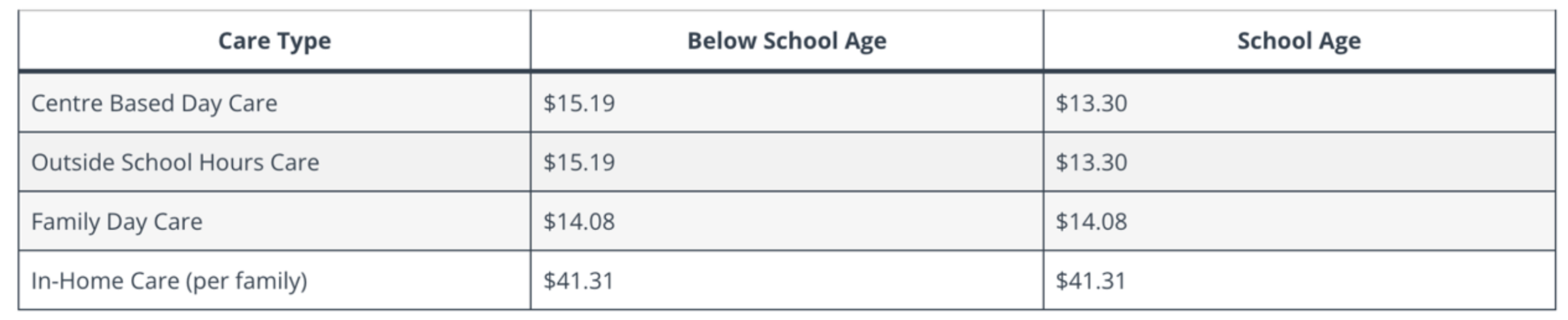
If provider’s fees exceed these caps, the family pays the difference on the additional amount out of pocket.
What’s Already in Place from January 2026
Several important changes came into effect at the start of 2026 and continue into the new CCS year.
The 3 Day Guarantee
All CCS-eliglble families, receive a guaranteed 72 hours of subsidised childcare per fortnight (equivalent to 3 days per week) regardless of their work, study, or activity status. Families who meet the activity requirements can still access up to 100 hours per fortnight.
Enhanced Support for First Nations Families
Families caring for First Nations children are entitled to 100 hours of subsidised care per fortnight, regardless of activity level.
What This Means for Your Service
With CCS caps and thresholds moving up with CPI, some families may see a slight reduction in out-of-pocket costs, particularly where provider fees sit at or below the hourly rate cap.
With a new CCS year starting, it’s a good moment to make sure your billing settings, fee structures and family communication are all up to date before 6 July.
What to Do Next
For families: Keep your income estimate current with Services Australia. If your estimate is too low, you may receive more CCS than your entitled to during the year and face a repayment at balancing time.
For services: Make sure your childcare management software reflects the new caps ahead of 6 July so that billing and subsidy calculations are accurate from day one of the new CCS year. OWNA handles these updates automatically, so if you’re an OWNA customer, you’re covered.
How does CCS work?
There are three factors that will determine a family’s level of CCS. These are: combined family income, the activity test and the type of child care provider. Visit the Department of Education to determine what you are entitled to https://www.education.gov.au/child-care-subsidy-
1. Family Income
The percentage of subsidy a family is entitled to is based on their combined annual income, with financial support available to lower income families.
2. Activity Test
The number of hours of subsidised child care that families have access to per fortnight is determined by a three-step activity test. In two parent families both parents, unless exempt, must meet the activity test. In the case where both parents meet different steps of the activity test, the parent with the lowest entitlement determines the hours of subsidised care for the child.
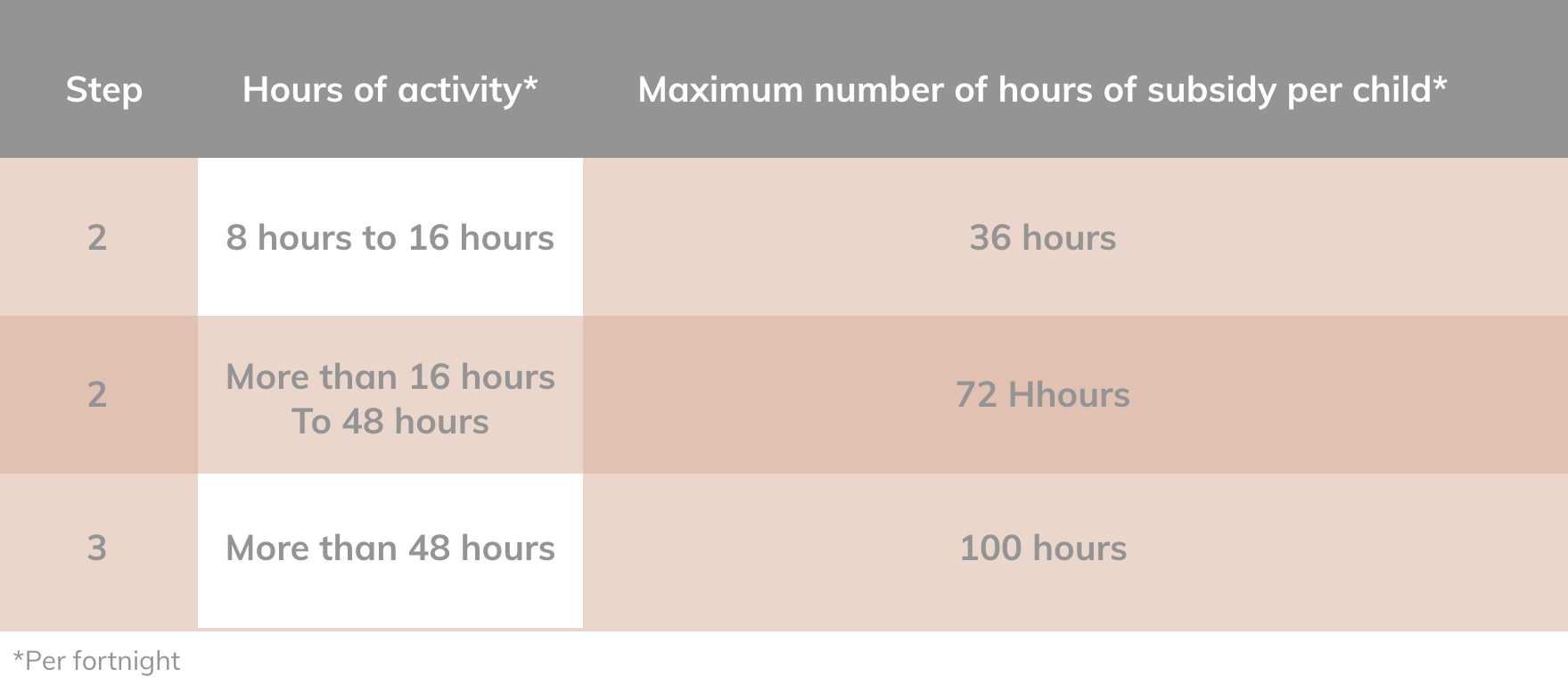
Low income families with a combined annual income of $69,390 or less who do not meet and are not exempt from the activity test are entitled to 24 hours of subsidised care per fortnight under the Child Care Safety Net.
Type of Service
The maximum hourly rate the Government will subsidise is based on the type of childcare service. Please discuss with our Centre Director what your hourly cap rate will be.
No Jab, No Pay
Your child must meet immunisation requirements to get Child Care Subsidy and Additional Child Care Subsidy and the full rate of FTB Part A. Under the No Jab, No Pay measure, parents who do not fully immunise their children up to 19 years of age will no longer be eligible for family assistance payments, with exemptions for children with medical contraindications or natural immunity for certain diseases and those on a recognised catch-up schedule. More information about the No Jab No Pay measure is available at https://www.health.gov.au/sites/default/files/no-jab-no-pay-fsheet.pdf
If your family is eligible for the childcare subsidy then you need to apply through Centrelink for this payment and this money will be deducted from your fees. This means you only need to pay the ‘gap’ amount. The amount will vary depending on how you are assessed by Centrelink.
Please contact our Centre Director if you have any fee queries and we can discuss your individual circumstances with you and provide a fee estimate based on your information.
Free Kindy in Queensland
Starting in 2024, the Queensland government launched it’s Free Kindy Program of which our Morayfield centre is approved.
Kindy is 15 hours per week, 40 weeks per year and is free for Queensland children attending a government-approved kindergarten program.
Kindergarten is delivered in different ways at different services, please contact our team to learn how free kindy is delivered at our centres.